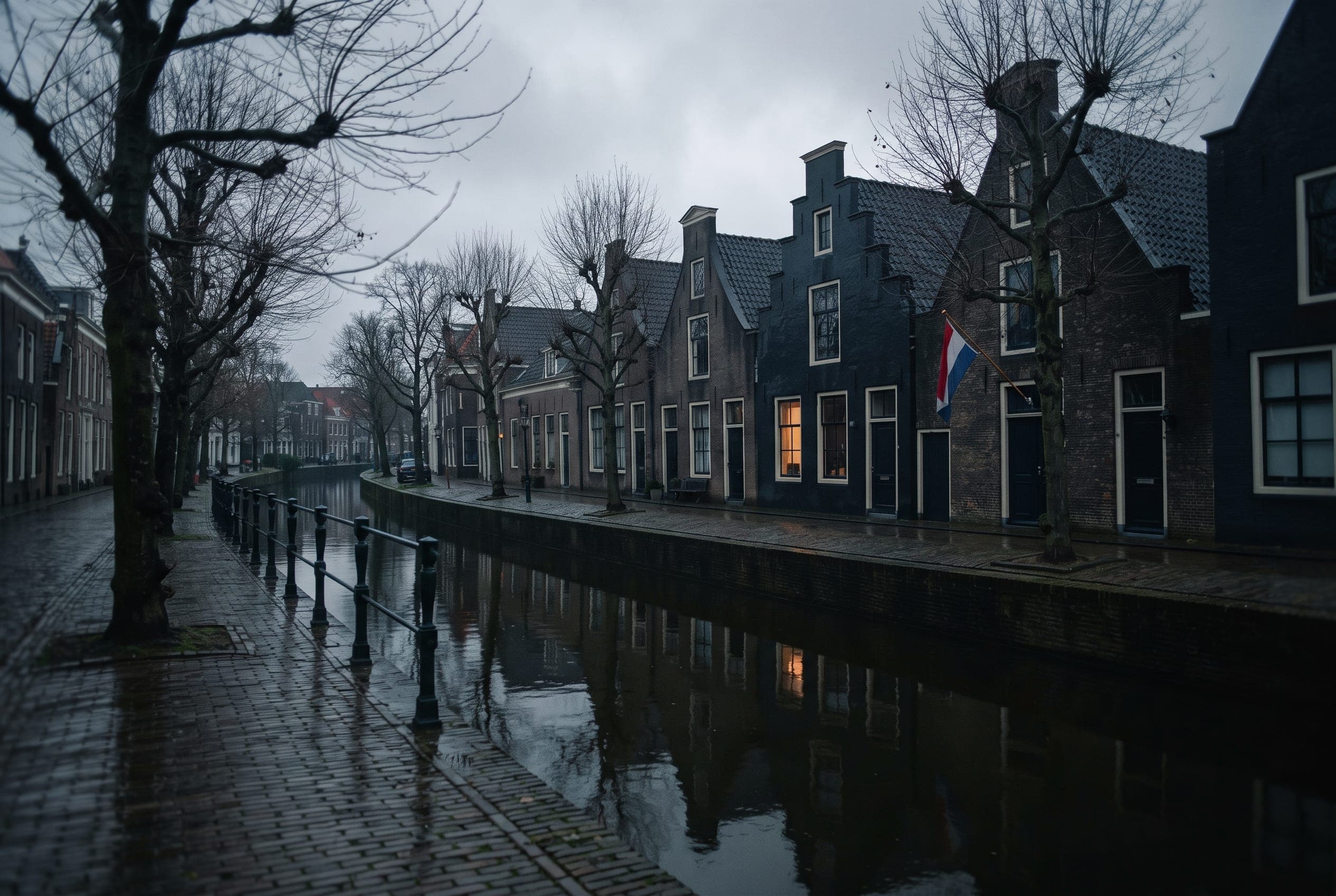
The Netherlands in January
Cheapest, emptiest, darkest. The month to see the big museums properly.
Cold in a damp, penetrating way rather than a dramatic one. Hard frost happens but rarely lasts, so the postcard of skaters on a frozen canal is a memory of a different climate, not a plan you can make. What you get instead is low sideways light on wet brick, streets that belong to the people who live on them, and interiors that were designed for exactly this — brown cafés with fogged windows, museum halls with nobody standing in front of the paintings. The wind off the North Sea is the part visitors underestimate; it is not the temperature that sends people indoors, it is the horizontal drizzle behind it.
January at a glance
- Average high and low
- 6.2°C / 1.2°C
- Schiphol long-run normals
- Sunshine
- 69 hours across the month
- Daylight
- 08:41 to 16:58, 8h 17m
- Amsterdam, on the fifteenth
- Crowds
- Quiet
- Prices
- Cheapest
- Season
- Winter
MuseumsLow budgetsSolo tripsLong lunches
How busy, and what it costs
The two things that change most across the Dutch year, and the two most people plan around.
Crowds: Quiet
After the first week the country empties out completely. This is the one stretch of the year when you can walk up to a major museum on a weekday morning and simply go in, and when a restaurant that normally wants a week of notice will seat you the same evening. Sightlines in the popular rooms are clear enough that you notice how much of the usual experience is other people's shoulders.
Prices: Cheapest
The bottom of the market, along with November. In The Hague rooms often sit in the 65 to 95 euro band in these two months, against something close to 210 euros for a central room on a sunny July weekend. Amsterdam does not fall that far, but it falls, and the drop is steepest in the second and third weeks once the New Year crowd has flown home.
What is on in January
Dates that move year to year are marked as such. Check the organiser before you book flights around one.
Nieuwjaarsduik
1 JanuaryScheveningen and beaches nationwide
The New Year sea plunge. Thousands of people run into the North Sea in orange hats, watch for four minutes, then run back out. Go as a spectator; the beach bonfires the night before are the other half of the ritual.
Eurosonic Noorderslag
Mid-January, dates shift yearlyA showcase festival spread across venues in the northern student city, and the reason Groningen has a busy week in an otherwise dead month. Check the current dates before booking a room there, in either direction.
What to skip in January
Things that are worth the trip in another month and are not worth it in this one.
- Anything that floats. Giethoorn's whole point is the boats, and the day tours largely stop running after October, taking the seasonal express bus with them.
- The bulb fields. Keukenhof does not open until the second half of March, and there is nothing in the ground to look at before then.
- Long cycling days. The paths are open and empty, but a headwind at four degrees turns a pleasant forty kilometres into an endurance event.
What to pack, and the verdict
Packing
A genuinely waterproof coat with a hood, because an umbrella and a coastal gust are not compatible. Shoes you accept will get wet, and a second pair drying at the hotel. Gloves you can still use a phone through, since you will be checking departure boards outside. Nothing here needs to be heavy — layers under a shell beat one thick coat.
Should you come in January?
Come in January if the trip you actually want is indoors. The art, the food, the cafés and the trains all work exactly as well as they do in June, and they cost less and involve less queueing. What you give up is daylight and everything that depends on it: no gardens, no boats, no beach, no lingering on a terrace. First-time visitors who imagine canals and tulips will feel short-changed. Second-time visitors who came in April and swore never again will feel vindicated. If you are choosing purely on value, this and November are the two months where the money goes furthest.
Frequently asked questions
+Will the canals be frozen?
+Is it too dark to see anything?
+Does anything actually close?
Next steps
You have a month. Now pick a length and who is coming.
Every plan on the site carries a winter version covering what opens, what to wear and what to book differently in January. Start with the twelve day-by-day plans, or compare January against the rest of the year on the month-by-month table.