eSIM, roaming and staying connected
Roaming rules, whether an eSIM is worth it, train signal and the four apps that matter.
On this page
A Dutch trip is unusually dependent on a working phone. Not for photographs — for the departure board in your pocket, the map that tells you which side of the canal you are on, and the ticket that is now a contactless tap rather than a piece of card. Losing signal in the Netherlands is not dangerous, but it is inconvenient in a way that eats an afternoon. This page is about how to make sure that does not happen, and about how little you probably need to spend.
Start here: do you need to do anything at all?
If your phone contract is from an EU country, no. The "roam like at home" regime means your domestic allowance follows you across the union, and it also covers Iceland, Liechtenstein and Norway, plus Moldova and Ukraine. You land, the phone finds a Dutch network, and nothing changes on your bill. The one caveat is a fair use policy: operators may cap how much data you can use at your domestic price, which matters on a long stay and almost never on a week.
If your contract is from anywhere else, check one number before you fly — what your operator charges per day, or per megabyte, for Europe. That single figure decides everything below. Some operators bundle European roaming at no extra cost. Some sell a flat daily pass that is entirely reasonable for a short trip. And some still bill at a rate that will produce a memorable invoice.
Is a Dutch eSIM worth it?
For most short visits from outside Europe, yes — an eSIM is the cheapest and least fiddly option, and it is worth ten minutes of preparation.
An eSIM is a SIM you install by scanning a code instead of swapping a piece of plastic. Nothing is posted to you and nothing is removed from your phone, so your home number stays live for calls and messages while the data runs over the Dutch profile. That dual arrangement is the real argument for it: you keep the number your bank sends codes to, and you stop paying international rates for maps.
Two decisions inside that decision:
- Buy before you fly, or on arrival? Buying before means you land connected, which is worth a lot at 07:00 with a hotel address you cannot remember. Install the profile at home over your own wifi and switch it on when the aircraft doors open.
- Travel eSIM or Dutch provider? A data-only travel eSIM covering Europe is usually simplest for a week. A plan from a Dutch provider gives you a Dutch number as well, which you almost never need as a visitor — very little here requires an SMS to a local number.
The three national networks are KPN, Odido (the former T-Mobile Netherlands) and Vodafone, and a slate of smaller providers resell capacity on them. Coverage between the three is close enough that price and data allowance should decide it rather than the logo. Dutch prepaid pricing is low by international standards: at the time of writing, day bundles start around EUR 1 and monthly plans around EUR 4.
What actually works on a Dutch train
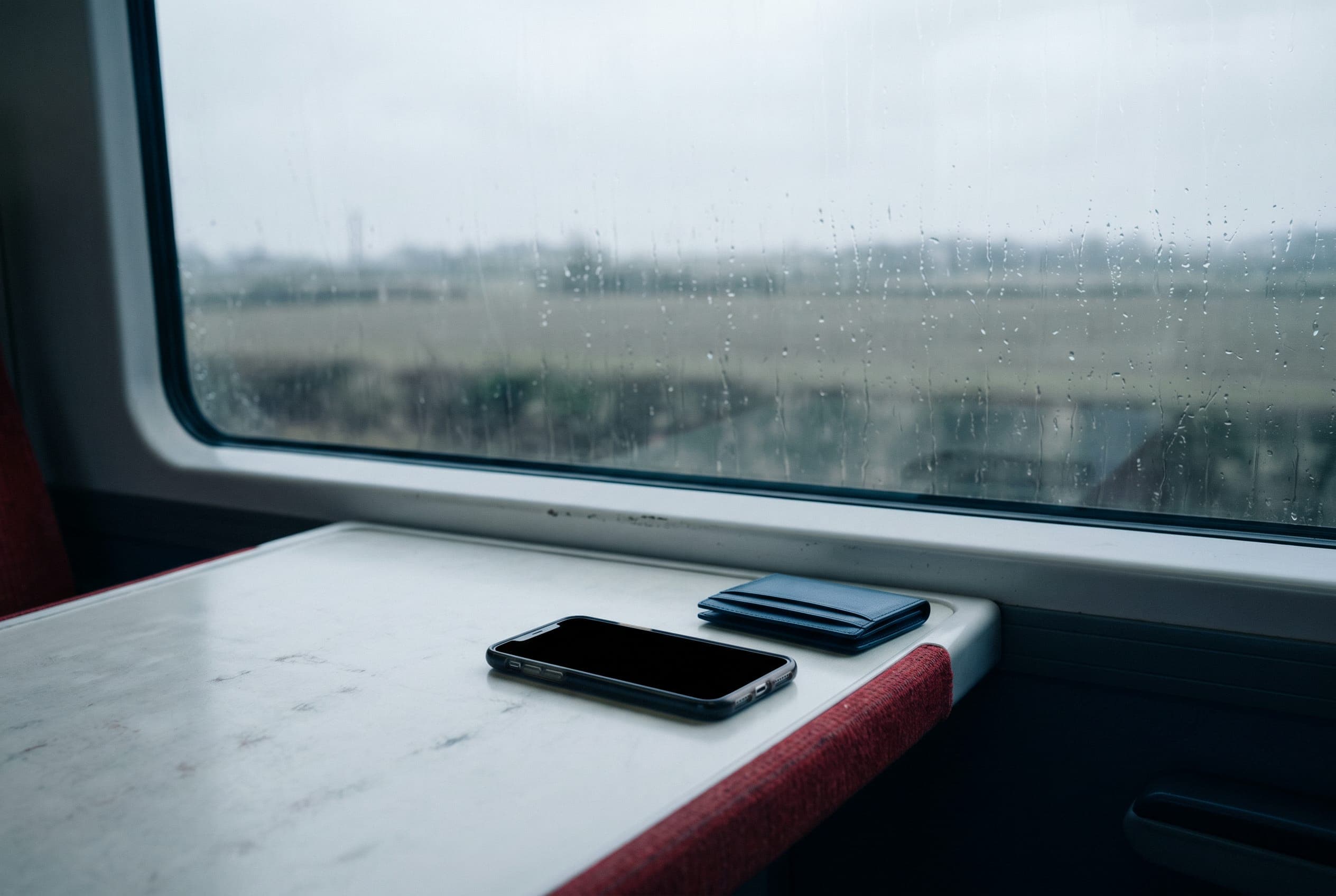
This is the question nobody answers honestly, so: mobile data on Dutch trains is good and not perfect. On the intercity spine between the big cities you will hold a usable connection most of the way. In cuttings, tunnels and the deeper countryside it drops, and video calls suffer more than anything else. Nothing about this is a problem if you are not depending on the connection minute to minute.
The trains themselves help. The national railway offers free wifi on almost all Intercity services, and you connect by picking "Wi-Fi on the train" from the network list — no password, no voucher. Sprinters, the stopping trains, are built for short hops and are the ones to expect less from. Either way, download the things that matter before you board.
Public wifi
Free wifi is normal in Dutch cafés, hotels, museums and the airport, and it is generally fast. Ask for the wachtwoord— password and you will be given it without ceremony; the sticker on the wall usually saves you asking.
The apps that matter
Four, and no more than four.
NS is the national railway app: departures, platform numbers, disruptions and live delays. It is the one to install first, because a Dutch itinerary is a train itinerary, and the departure boards on the platform are duplicated in your hand.
9292 is the national journey planner across every operator — trains, trams, buses, metros and ferries in one search. It is the app for the awkward last leg, the one where a bus number matters and the railway app has stopped being useful.
Your maps app, with the Netherlands downloaded for offline use. Do this at the hotel on the first night. It is the difference between a dead phone being an annoyance and a dead phone being a problem.
Your bank or wallet app, because the phone is a payment device here in a way it is not everywhere. Transport taps, cafés and museums all run on it; see our money essential for which cards are actually accepted, and arriving at Schiphol for the first tap of the trip.
You do not need a translation app. English is spoken close to universally in the places a visitor goes, and staff will switch to it before you finish apologising for not speaking Dutch. Learn alstublieft— please / here you are and dank je wel— thank you and you have done your part.
Power
Sockets take the standard continental European two-round-pin plug. If you are coming from the United Kingdom, North America, Australia or Japan, bring an adapter — hotels sometimes have a spare at reception and cannot be relied on for one. A small power bank is more useful here than in most destinations, because a day of navigation, tapping and photographs is hard on a battery, and there is no guarantee of a socket on a Sprinter.
Frequently asked questions
Will my phone work the moment I land?
If you are roaming from an EU contract, yes, automatically. If you installed an eSIM before flying, yes, once you switch the line on. Otherwise you are on airport wifi until you arrange something, which is precisely why the pre-flight check above exists.
Can I use my phone as a transport ticket?
Yes. A contactless card in the phone's wallet taps in and out exactly like the plastic, on trains, trams, metros and buses. Use the same device at both ends of a journey — the system matches the card, not the traveller.
Do I need a Dutch phone number?
Almost never. Restaurants take bookings online, museums sell timed entry online, and your hotel will email. A Dutch number is for people who are moving here, not visiting.
Is there wifi on every train?
Not on every one. Expect it on the Intercity services and treat it as a bonus on the stopping trains, and download anything you actually need before you board.
What about my home number while I use a travel eSIM?
It stays reachable. Keep the home line active for calls and texts, and set data to the eSIM. That is the arrangement that keeps two-factor codes arriving without the roaming bill.
Is my data usage going to be enormous?
Not on a typical trip. Maps, transit apps and messaging are light; the things that consume data are video, cloud photo backup and streaming. Turn off automatic photo upload for the week and a modest bundle will outlast your visit.
Twelve day-by-day plans, one for each combination of trip length and who is coming. These three are a good place to start.
- 5 days in the Netherlands with familyOne hotel for five nights, with day trips to Utrecht, the coast and the windmills5-day tripWith family
- 7 days in the Netherlands soloAmsterdam, a design city in Brabant, then five nights of slow southern Limburg7-day tripTravelling solo
- 2 days in the Netherlands as a coupleArt, evening canals and a slow Delft morning worth the train2-day tripAs a couple