Accessibility and mobility in the Netherlands
Trains, trams and museums are strong; the seventeenth-century streets are not. What to check before you book.
On this page
The Netherlands is two countries at once for anyone with limited mobility. The transport is among the most accessible in Europe, the big museums are properly equipped, and the flat terrain removes the hill problem that defeats visitors elsewhere. Then you step out of the station into a seventeenth-century centre paved in brick, with narrow cambered pavements, humped bridges and quaysides that slope towards open water.
The system is not the obstacle here. The surface is. Plan around that and a great deal opens up.
Trains: the strong part of the system
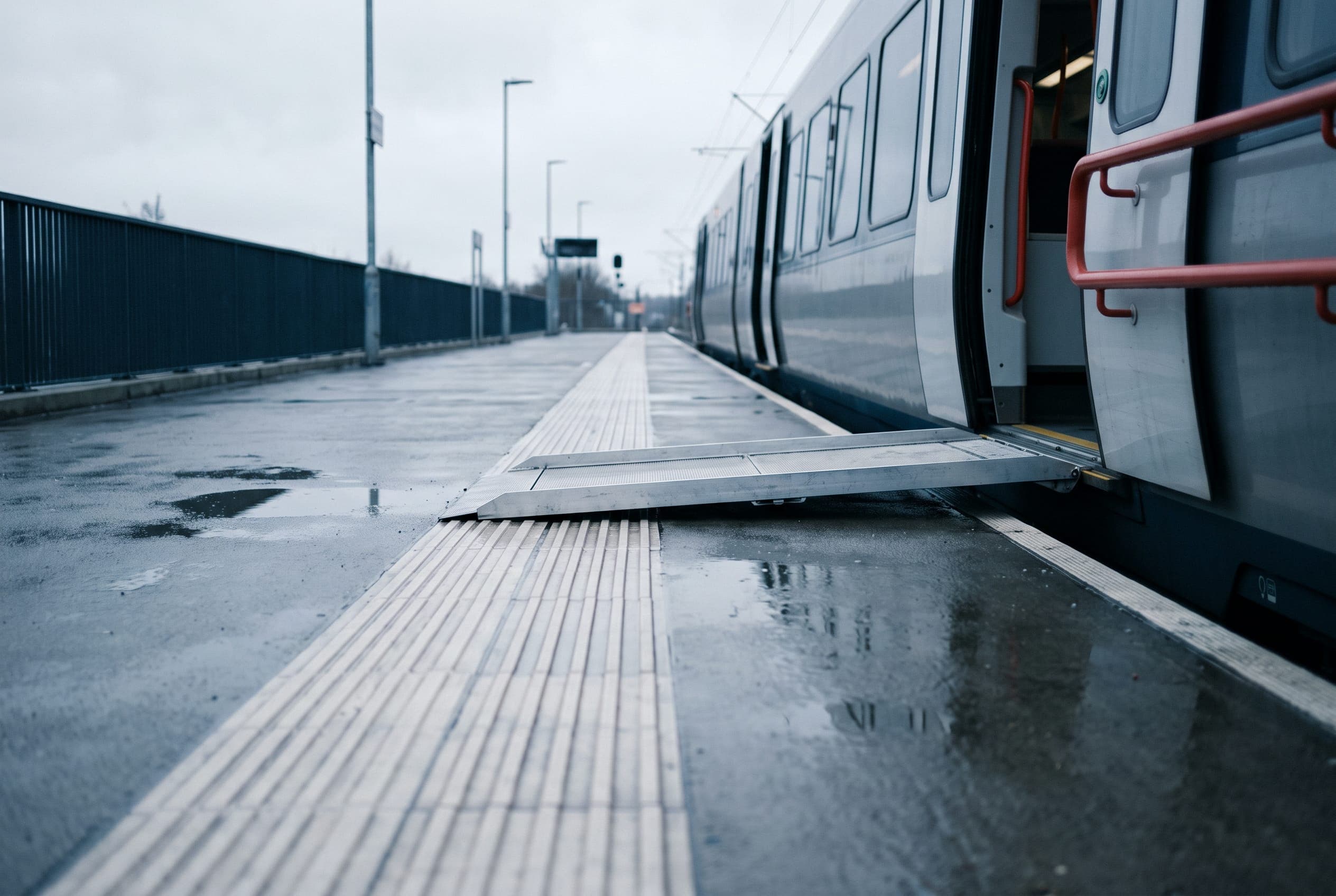
National rail is the backbone of any Dutch trip and it is built for this. Wheelchairs and mobility scooters travel free. Every train has a wheelchair-accessible toilet, and the wheelchair space is marked on the floor and by a blue symbol on the door, with a companion seat alongside it.
The gap between train and platform is the classic problem, and it has been partly engineered away: all Sprinters and the newer ICNG Intercity trains have sliding steps that extend to close it. Where the platform is at the right height, that means boarding without anyone's help.
Where it is not — or where you use a mobility aid with small wheels or low footrests, or have less arm strength on the day — NS Travel Assistance covers it. It is called reisassistentie/RICE-ah-sis-TEN-tsee/— travel assistance and it is free.
Two things to check before you rely on a route. First, use the "show only accessible journeys" filter in the NS journey planner — it restricts results to stations where boarding and alighting will work for you, and it beats researching stations one at a time. Second, lifts break. NS publishes live lift status in its app and on the website, and a station that is normally step-free is not step-free on a day its lift is out; build that into a tight connection rather than gambling on it.
Schiphol is the easy case: the station sits directly beneath the terminal, reached by lift. Our arriving at Schiphol essential walks the route.
City transport: take the metro over the tram
In Amsterdam the reliable choice is the metro. Every metro station is marked wheelchair accessible, with lifts, ramps and extra-wide fare gates, and the newest rolling stock leaves only a small gap at the platform. Staff at the big interchanges help bridge a wider gap; the smaller unstaffed stations are the ones to check first.
Trams are a lottery decided by which vehicle turns up. Newer trams have wide, level-entry doors marked with a wheelchair sign, and the conductor can put out a foldable ramp. Older models have steps and no ramp at all. If a tram is central to your plan, allow for waiting out one that is not.
Buses are consistently good — low floor, a designated wheelchair space in the middle, a fold-out ramp the driver fits. So are the free ferries across the IJ behind Amsterdam Centraal, which board over wide ramps everyone uses.
GVB's trip planner has an accessible-planning option, and its app lists current lift and escalator disruptions. Payment is the same for everyone: tap in and out with a contactless card via OVpay, with no pass to buy ahead — see our transport essential.
Cobbles and bridges: the real obstacle
Nobody warns visitors about this and it is the thing that actually shapes a day.
Historic centres are paved in brick and cobble rather than asphalt. Pavements are often narrow, cluttered with parked bicycles and café boards, and cambered towards the canal. Bridges are humped, and while the gradients are short they arrive constantly. Small hard wheels — a lightweight manual chair, a rollator, a walking frame — feel every one of those surfaces; larger wheels and a powered chair cope far better.
The workarounds are real. Route along the wider modern shopping streets rather than the pretty back canals; the direct way is often the harder one here. And pick your cities deliberately: Rotterdam is the easiest big Dutch city to move around, because its centre was flattened in May 1940 and rebuilt modern, which means level entrances, wide pavements and lifts as standard. Leiden is at the other end — its own tourist office acknowledges that the cobbles are hard work for wheelchair users and will suggest routes if you ask. That offer exists in most Dutch towns and is under-used.
Canal boats
Seeing a canal city from the water sidesteps the cobble problem entirely, which makes a cruise more valuable here than it looks on a list of attractions.
The covered, guided cruises are the ones that work: the shared hour-long boats in Amsterdam, Utrecht and Leiden, and the covered cruises in Giethoorn, all take wheelchairs comfortably. A small open boat or a self-drive rental does not — the step down into the hull is the problem, and no operator can engineer it away.
Even among the covered cruises, accessible boarding is usually a subset of the fleet, and it often happens at one specific jetty rather than at every dock. So do not book the first departure that suits: contact the operator, say what you need, and ask which sailings use an accessible boat and where it boards. Our pick of the standard cruises is the classic Amsterdam canal cruise; ask the same question of any of them.
What the museums provide
Provision at the major museums is good and specific, and each publishes its own detail — the page to read before booking.
The same split runs through the older attractions. Church towers are universally out — every one is a narrow spiral with no lift. At Zaanse Schans, the working sawmill Het Jonge Schaap is the only wheelchair-accessible mill, while De Kat's ladder-like stairs rule it out entirely. Keukenhof is at the good end: paved paths throughout, wheelchairs reservable online. On Texel, the 4.5-kilometre Alloo trail from Ecomare is wheelchair-accessible with Braille and audio guides.
Hotels, and the questions to ask
The Dutch accommodation problem is architectural. A canal house is tall, narrow and listed, its staircases are famously steep, and many have no lift and cannot legally acquire one. Filtering a booking site for "accessible" is not enough, because the word is used loosely.
Ask four questions by email instead, and keep the reply: is there a step at the street entrance; does a lift reach my floor; how wide is the bathroom door; is the shower step-free or over a bath rim. Modern hotels near the big stations, and the chains in Rotterdam and around Amsterdam Zuid, answer all four well. The romantic canal-house room usually does not. The Dutch lift/lift/— elevator means the elevator — a listing saying "geen lift" has none.
Frequently asked questions
Can I get around using only trains and metros?
Largely, yes. Trains have near-level boarding on modern stock and free assistance on request, and Amsterdam's metro is fully lift-served. The gaps are the last few hundred metres on foot, and older trams.
How far ahead must I book train assistance?
At least one hour before departure, and around three weeks ahead if the journey needs special arrangements. Be at the meeting point on your confirmation fifteen minutes before the train leaves.
Which Dutch city is easiest with a wheelchair?
Rotterdam, comfortably: rebuilt after 1940, so the centre is modern, level and generously paved. Utrecht and The Hague sit in the middle. Leiden, Delft and the Amsterdam canal ring are the hardest.
Is Amsterdam's tram network usable?
Partly. Newer trams have level entry and a conductor-operated ramp; older ones have steps and none. Treat the metro, buses and IJ ferries as the dependable options and the tram as a bonus.
Are canal cruises wheelchair accessible?
Some are. Covered guided cruises take wheelchairs; open and self-drive boats do not. Accessible boats are usually part of a fleet and board at one particular jetty, so ask the operator which departures rather than booking blind.
Where should I check before I book?
Four places: the NS journey planner's accessible-journeys filter, the GVB app for lift outages, each attraction's own accessibility page, and the local tourist office, which gives route advice on request. Then build the day with our trip plans.
Twelve day-by-day plans, one for each combination of trip length and who is coming. These three are a good place to start.
- 2 days in the Netherlands as a coupleArt, evening canals and a slow Delft morning worth the train2-day tripAs a couple
- 3 days in the Netherlands with familyAmsterdam, windmills and museums at a pace that works with children3-day tripWith family
- 5 days in the Netherlands soloTwo nights in Amsterdam, then a Rotterdam base for windmills, harbour and Delft5-day tripTravelling solo