Dutch etiquette for visitors
Bikes, canals, quiet neighborhoods, coffeeshops and respectful visitor behavior.
On this page
There is one idea underneath almost every rule on this page, and knowing it saves you learning the rules one at a time. Dutch social life runs on a low tolerance for hierarchy and a high tolerance for difference. The culture minimises visible displays of status and rank, it accepts the need to follow rules, and it combines that with a genuine respect for other people's privacy and choices. Once you can see those three things working together, Dutch directness stops reading as rudeness, the bike lane stops being a mystery, and the fact that nobody in the restaurant is checking on you starts to look like courtesy rather than neglect. Which is what it is.
Direct is normal
Dutch communication can feel blunt if you are used to softer service language. It is usually practical, not personal.
Here is the mechanism. In cultures with a lot of service padding, the softening language exists to protect a hierarchy: the customer is above the server, so the server hedges. In a culture with very low power distance, that padding is not politeness, it is noise, and removing it is the respectful move. A Dutch person who tells you flatly that the museum you have asked about is not worth the money is not being dismissive. They are treating you as an adult who asked a question and wants the answer.
The practical consequences for a visitor are small and specific. Nobody will pretend a queue is shorter than it is. Nobody will say "no problem at all" when it is a problem. A "no" is a real no rather than an opening position, which means you can stop negotiating. And the flipside applies too — if you want something, ask for it plainly. Elaborate hinting will simply not be decoded.
Doe maar gewoon/doo mar khuh-WOAN/— just act normal is the national instruction, and the full proverb continues "then you are being mad enough already". It is a warning against showing off, and it explains a great deal — why the wealthy cycle, why nobody makes a scene in a restaurant, and why boasting lands badly here.
Respect residential Amsterdam
The canal belt and Jordaan are lived-in neighborhoods. Keep noise down late, do not block doors for photos and do not treat stoops as public seating.
This is the part visitors get wrong most often and understand least, because a canal house looks like an exhibit. It is somebody's front door, on a street thirty feet wide, where sound reflects off water and brick and travels a long way at two in the morning. Amsterdam has spent years tightening rules in the old centre precisely because residents were losing their own neighbourhood, and a visitor who is quiet after dark is participating in that rather than being scolded by it.
Concretely: no shouting or singing in canal streets late at night; do not sit on the front steps of a private house; do not block a doorway or a bridge to take a photograph, and step aside when someone needs to pass; keep group photographs to the middle of a bridge rather than the entrance to one. Rented flats have neighbours with jobs, and thin floors.
Bike traffic has priority energy
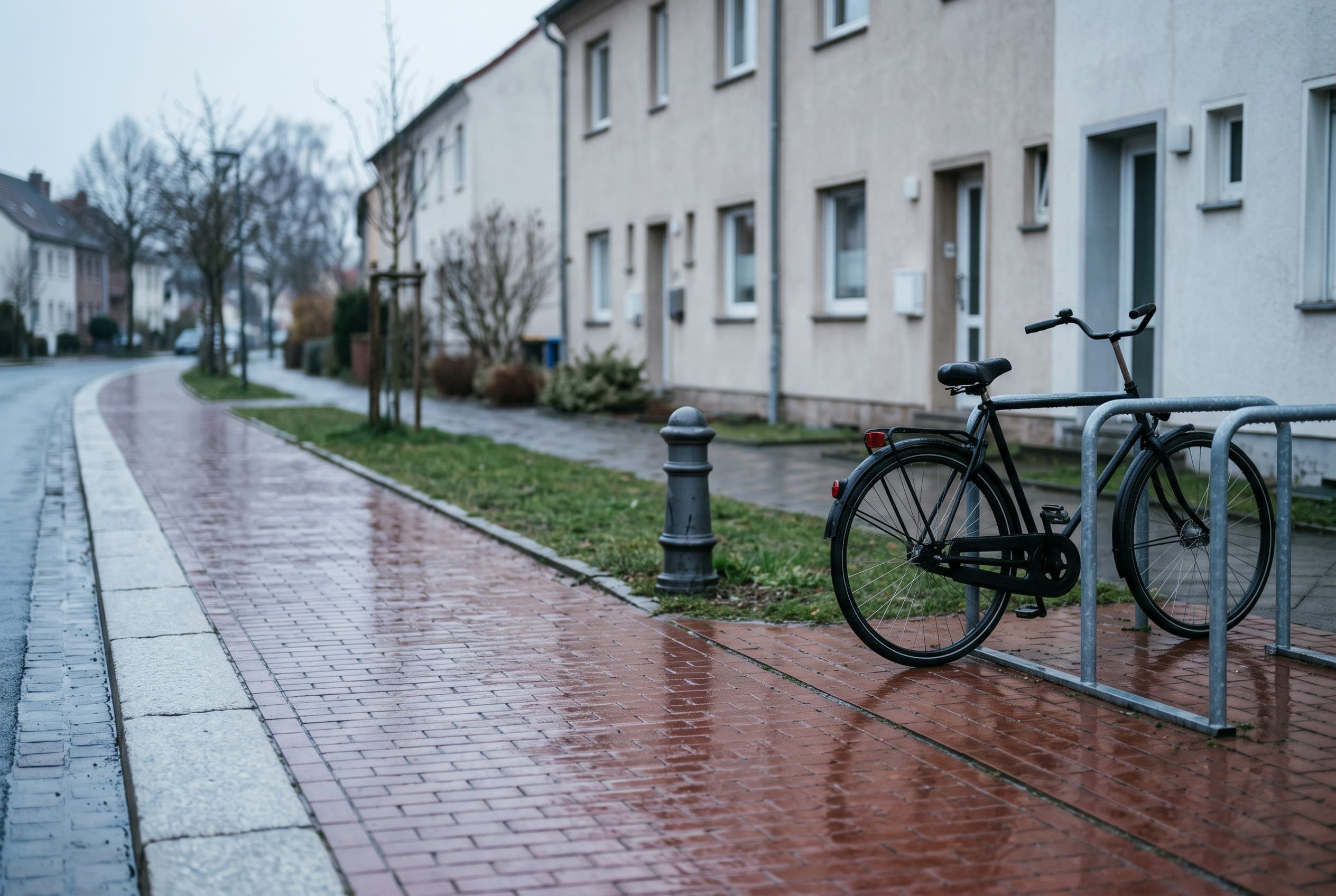
Cyclists expect predictable movement. Cross carefully, keep walking lanes clear and never step backward into a bike lane for a photo.
Treat this as a social contract rather than a road rule, because that is how it is experienced. Everyone on a Dutch cycle path is relying on everyone else to be legible: to hold a line, to signal a turn with an outstretched arm, to not stop dead. Pedestrians who wander into the lane are not committing an offence so much as breaking the agreement that lets thirty thousand people commute past each other without a fuss. That is why the reaction is a bell and a look rather than a shrug.
If you cycle, join the contract. Ride on the right, overtake on the left, put your arm out before you turn, and do not stop in the middle of the lane to check a map — pull off it first, exactly as you would with a car. Lights after dark are a legal requirement and the police enforce them. Holding a phone while riding has been illegal since 1 July 2019, and it is one of the few things a tourist gets fined for here. Two people on one bike, sitting on the rear rack, is a common local sight and also frequently unlawful; it is not the hill to test.
Queueing and personal space
The Netherlands queues, and it does so informally rather than in a line. At a bakery, a cheese counter or a market stall you will often find a ticket dispenser; take a number. Where there is no dispenser, everybody quietly knows the order and it works. The way to enter is not to hover ambiguously but to make eye contact and ask who is last — the alternative, edging forward until someone serves you, is read as exactly what it looks like.
Personal space is on the larger side, physical contact between strangers is minimal, and a handshake is the standard greeting in any formal setting. Punctuality matters more here than in much of Europe; an afspraak/AF-sprahk/— appointment at two means two, and being fifteen minutes late without a message is genuinely rude. This applies to restaurant bookings and guided tours as much as to business.
Service pace
Restaurants may not rush you or bring the bill until asked. Signal politely when ready and expect practical service rather than constant check-ins.
The table is yours for the evening once you have it, which is the trade. Nobody will hover, nobody will ask four times whether everything is fine, and nobody will drop the bill on the table as a hint. When you want to leave, catch the server's eye and ask for the bill. Expecting it to arrive on its own is the single most common source of visitor irritation here, and it is a misreading — the delay is the restaurant declining to hurry you.
Two related notes. Tap water is often not brought automatically and asking for it is fine. And in a busy brown café you may well be asked to share a table, which is a normal offer and not an intrusion.
Tipping, in the right register
Tipping is appreciated and it is small. Round a café bill up to the nearest euro or two; add somewhere in the region of five to ten percent after a good dinner; round a taxi fare up. Nothing else is expected — not housekeeping, not the bakery, not the person who pours your coffee at the counter. Service is in the price rather than topped up to make a wage, so a tip here means the meal was good rather than that you have discharged an obligation.
The register matters as much as the amount. A large flourish of a tip is the kind of status display that "doe maar gewoon" is aimed at; it will make everyone slightly uncomfortable. Card terminals in tourist areas increasingly offer American-sized default percentages, and choosing the lowest option or skipping it entirely draws no reaction at all. Money covers the mechanics.
Photography, and the one absolute rule
Photograph the buildings, the bikes, the boats and the light. Do not photograph people in the Red Light District. Photographing or filming sex workers is the one rule in Amsterdam with no flexibility whatsoever — it is a serious violation of the privacy and safety of people at work, and you will be confronted by workers, minders or police and told to delete it. Keep the phone in your pocket on the window streets. Guided tours past the windows have been banned since 2020 for the same reason.
The softer version applies everywhere else. Dutch privacy norms are strong, so do not put a camera in a stranger's face, in a café, at a market or in a coffeeshop.
Coffeeshops
Be discreet, follow house rules and do not smoke wherever you like. Cannabis tolerance is not a license to ignore local rules or neighbors.
The specifics: you must be eighteen and able to show photo identification, coffeeshops may sell a maximum of five grams per person per day and may not sell alcohol, and smoking cannabis on the street is banned and fined in the old centre of Amsterdam. Inside, the etiquette is a café's etiquette — buy something, do not bring your own alcohol, do not photograph other customers, and ask staff rather than guessing. Being visibly out of your depth is fine and common; staff are used to it and would rather help than clean up afterwards. Full detail in Red Light District and coffeeshop rules.
Frequently asked questions
Are Dutch people rude?
No, they are unpadded. The absence of service softeners reads as bluntness to visitors from cultures that use a lot of it, but the intent is efficiency and equality rather than dismissal. Answer plainly in return and the exchange works perfectly.
Do I need to speak Dutch?
No. English is spoken to a very high standard almost everywhere a visitor goes. A greeting in Dutch is appreciated and switching to English immediately afterwards is entirely normal — see language and Dutch phrases.
How much should I tip?
Round up small bills; five to ten percent after a good restaurant meal. Nothing at all after indifferent service, without awkwardness. Tipping is a genuine extra here rather than a wage subsidy.
Is it rude to ask for the bill?
The opposite — it is expected. The bill will not arrive until you ask for it, because bringing it unprompted would be hurrying you out.
Can I take photos in the Red Light District?
Of the architecture and the canals, yes. Of the windows or the people working in them, never. This is the one rule with no grey area, and it is enforced immediately.
Is it acceptable to speak English straight away?
Yes, though opening with a Dutch greeting is a small courtesy that lands well. Nobody will be offended by English; the country is unusually comfortable in it.
What is the fastest way to annoy a local?
Stand still in a bike lane. Everything else on this page is a matter of degree; that one produces an immediate reaction, and rightly, because you have stopped traffic on a road.
Twelve day-by-day plans, one for each combination of trip length and who is coming. These three are a good place to start.
- 5 days in the Netherlands with familyOne hotel for five nights, with day trips to Utrecht, the coast and the windmills5-day tripWith family
- 7 days in the Netherlands soloAmsterdam, a design city in Brabant, then five nights of slow southern Limburg7-day tripTravelling solo
- 2 days in the Netherlands as a coupleArt, evening canals and a slow Delft morning worth the train2-day tripAs a couple