Travelling the Netherlands solo
Eating alone, night-time neighbourhoods, meeting people, and honest notes for women and LGBTQ+ travellers.
On this page
The Netherlands is one of the easiest countries in Europe to travel alone, and the reasons are dull and reliable. Almost everyone speaks English, so you are never locked out of a conversation or a menu. The trains reach everything, so you never need a second person to share a car. Cities are small enough to walk, and so close together that a bad day can be abandoned and restarted somewhere else by lunchtime.
What is harder is the same thing that is hard everywhere: dinner, and the third evening.
Eating alone without awkwardness
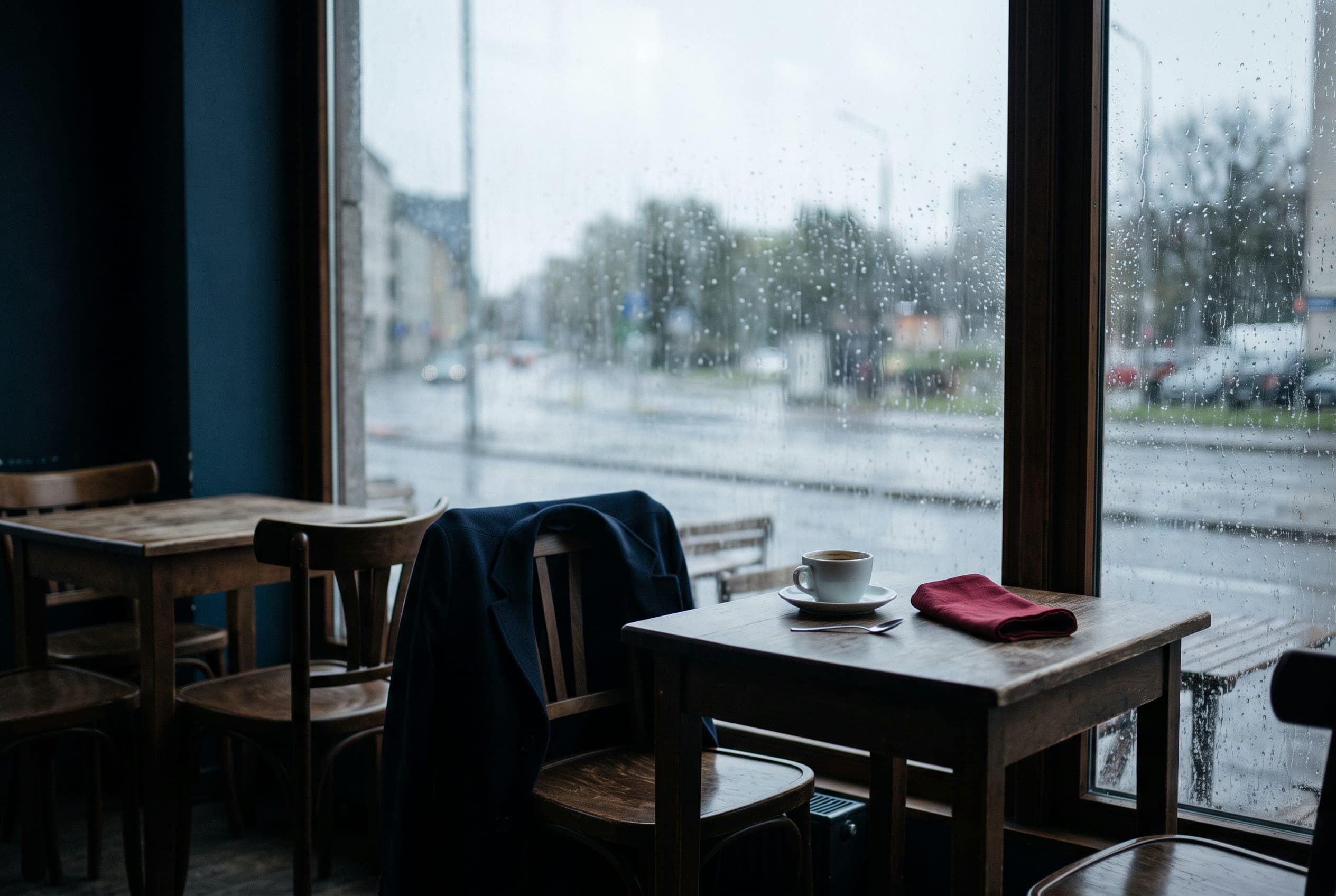
The single most useful thing to know is that the brown café — the bruin café/brown ka-FAY/— old wood-panelled pub — was built for this. Dark wood, a long bar, newspapers, no music loud enough to prevent talking. You sit at the bar, you order a beer and a plate of bitterballen, and nobody asks whether you are waiting for someone. Café Hoppe on the Spui in Amsterdam is the archetype; every Dutch city has several.
Food halls are the other easy answer. Foodhallen is counter service with communal tables: no host walking you to a table for one, no menu commitment. Standing food is entirely normal here too — a herring stall, a frituur, a broodje from a bakery, a Saturday market. It is the actual food culture rather than a compromise.
One honest exception. The Indonesian rijsttafel/RICE-tah-full/— rice table is the meal every first-time visitor is told to have, and it is built around a table of people sharing many small dishes. Solo it is expensive and faintly absurd. Order a single main instead, and save the rijsttafel for a trip with company.
Service is unhurried and nobody brings the bill until you ask, which suits a solo diner with a book perfectly. Ask with de rekening, alstublieft/duh RAY-kuh-ning/— the bill, please.
Where to base, and which streets feel fine at night
Base choice does more for a solo trip than any other decision.
In Amsterdam, the Jordaan and the Canal Belt are the first-timer's answer, with the Museum Quarter cheaper and still walkable. Oud-West and Oost feel like neighbourhoods rather than a tourist product, which matters more when you are alone. Where not to stay: the stretch between Dam Square and Centraal, which is chain hotels and traffic with no charm, and De Wallen, the Red Light District, whose party-town atmosphere the city is actively shedding.
Outside the capital, Rotterdam is a genuinely good solo city — big, modern, cheaper, and it eats later. citizenM Rotterdam is the pick our editors flag for people travelling alone: compact rooms, design-led communal space downstairs, and a location by Blaak station that puts the Markthal, the Cube Houses and the metro on the doorstep, which removes most of the after-dark navigation problem. Utrecht and Groningen are student cities — young crowds, cheap food, bars where sitting alone is normal.
After dark, the big canals and main shopping streets are well lit and busy, and walking them alone is ordinary. Where solo travellers run into trouble is narrower: Damrak and the Red Light District late at night, where crowds are drunk, touts are aggressive and pickpocketing clusters. Avoiding those streets takes no courage — walk one block over.
The practical safety points
The realistic risks are theft and traffic, not violence. Use ordinary city caution around Amsterdam Centraal, busy trams, Damrak, the big museums, markets and nightlife streets — the moments you are distracted by luggage or a map are the moments to be careful. Emergency services are on 112.
The other risk is the bike lane. The red strip beside the pavement is a road, and stepping into it is the commonest way visitors get hurt here. Do not make central Amsterdam your first-ever bike ride either; our safety essential has the detail.
Two habits worth keeping: tell someone at home roughly where you are each day, and keep your phone charged, since your ticket, map and payment all live on it. A local data plan removes the roaming anxiety — see eSIM and connectivity.
Meeting people, if you want to
Nothing here forces you to be social, which is the point of travelling alone. But if the third evening gets long, the options are real.
Hostels with proper common rooms do most of the work; the StayOkay network has them in Utrecht, on Texel and elsewhere, and Giethoorn's Black Sheep Hostel is a bar as much as a bed. Tours where the group is the point beat tours where the sight is the point: the Maastricht caves can only be visited with a guide, which turns an hour underground into an hour of conversation, and brewery tours on Texel do the same above ground.
Then there is Dutch directness, a genuine gift to a solo traveller. Conversation here is practical rather than smoothed over with politeness, so a straightforward question gets a straightforward answer and "may I sit here?" is answered honestly either way. Our etiquette and language essentials cover the texture of it.
Museums and tours that suit one person
Museums are the ideal solo activity and the Netherlands is full of the best kind. An audio tour is better alone than in company, and you can spend forty minutes in front of one painting without negotiating.
The Anne Frank House is emotionally heavy and better absorbed alone than discussed as you go; its Tuesday-morning ticket release is also the one place travelling solo is a structural advantage, because you need to catch one slot rather than four. The Rijksmuseum and the Mauritshuis both reward a slow, solitary pass.
Women travelling alone
This is a comfortable country to travel alone in as a woman, and ordinary city caution is enough. There is no dress code anywhere, churches included. Eating alone, drinking alone at a bar and taking a table for one are unremarkable and draw no comment.
The realistic annoyances sit in the same places as everything else on this page: nightlife streets at closing time, and the Red Light District, where drunk crowds and stag groups make the atmosphere worse than the actual risk. Plan the route home before you go out rather than after, prefer lit main streets to pretty back canals when walking late, and remember that the canal-edge warning applies more the tireder you are.
We have not fetched Dutch crime statistics for this page and will not imply a number we do not have. This is behavioural advice, not a risk score.
LGBTQ+ visitors
The Netherlands became the first country in the world to legalise same-sex marriage, with the law taking effect on 1 April 2001. Protection from discrimination on grounds of gender identity, gender expression and sex characteristics was added to anti-discrimination law in 2019, and protection on grounds of sexual orientation was written into the constitution itself in February 2023. That is a settled legal history rather than a recent gesture, and it shows in daily life.
In Amsterdam, the Homomonument stands at the Westermarkt beside the Westerkerk. Unveiled on 5 September 1987, it was the first monument in the world to commemorate gay men and lesbians persecuted for their sexuality, and it is a quiet place to stand for ten minutes. Pride falls in the height of summer and fills the city; book far ahead if you want to be there for it, and see when to go.
The honest caveat: acceptance is near-universal in the big cities and slightly more variable in small towns, as almost everywhere. None of that should change a first trip's itinerary.
Frequently asked questions
Is the Netherlands a good first solo trip?
One of the best in Europe. English is close to universal, the trains make independent movement trivial, the country is small enough that no mistake is expensive, and the culture is direct enough that asking for help works.
Which city should a solo traveller base in?
Amsterdam for a short first trip, because everything else is a day trip from it. Rotterdam or Utrecht for anything longer: cheaper, less touristed, easier to fall into a routine. Our trip plans include solo versions of every length.
Will I be charged a single supplement?
Rarely. Hotels price by room, so a single traveller pays less than a couple rather than more, and museums, trains and cruises are all per person. Only hire-by-the-hour boats and some multi-day tours penalise going alone.
Is it safe to walk back to my hotel at night?
On main streets and canals in any Dutch city, yes, with normal caution. Avoid the Damrak and Red Light District crush at closing time, keep away from unrailed canal edges if you have been drinking, and prefer a lit route to a short one.
How do I avoid feeling lonely on a longer trip?
Structure beats spontaneity. Book one guided thing every couple of days, stay somewhere with a common room part of the time, and eat your main meal at lunch. Loneliness on a solo trip almost always arrives at dinner.
Do I need to speak any Dutch?
No — roughly nine in ten Dutch people can hold a conversation in English, and in the tourist cities you may struggle to practise Dutch at all. A handful of courtesies still land well; our language essential has twenty worth carrying.
Twelve day-by-day plans, one for each combination of trip length and who is coming. These three are a good place to start.
- 2 days in the Netherlands soloAmsterdam at your own pace, then Haarlem for the quieter contrast2-day tripTravelling solo
- 3 days in the Netherlands soloAmsterdam on foot, then Utrecht's sunken canals for a different rhythm3-day tripTravelling solo
- 5 days in the Netherlands soloTwo nights in Amsterdam, then a Rotterdam base for windmills, harbour and Delft5-day tripTravelling solo