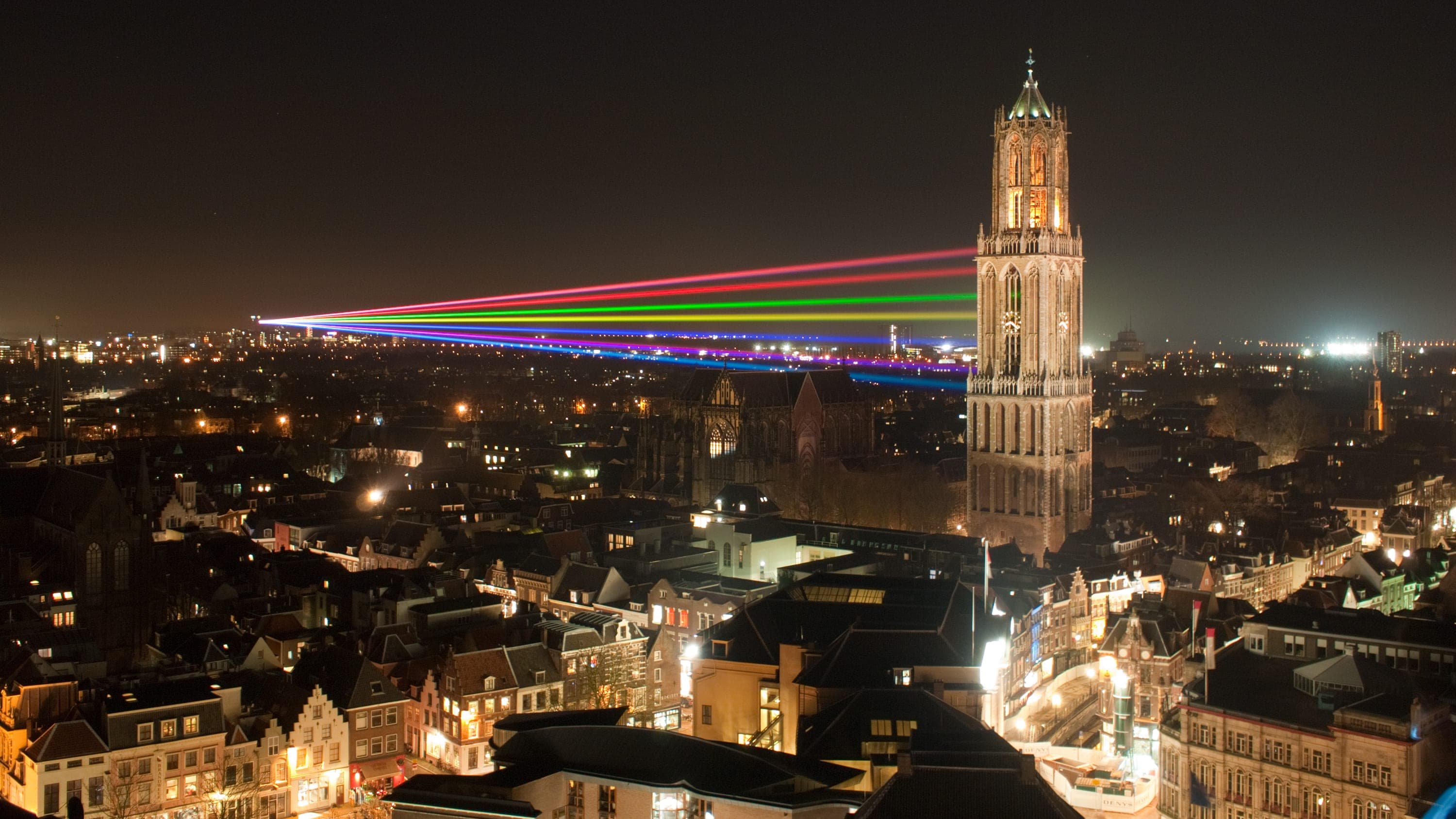
Utrecht gives visitors the canal feeling without Amsterdam's intensity, plus the country's most useful central rail hub.
If you do only a few things in Utrecht
Ordered by what a first-time visitor would most regret missing, for October.
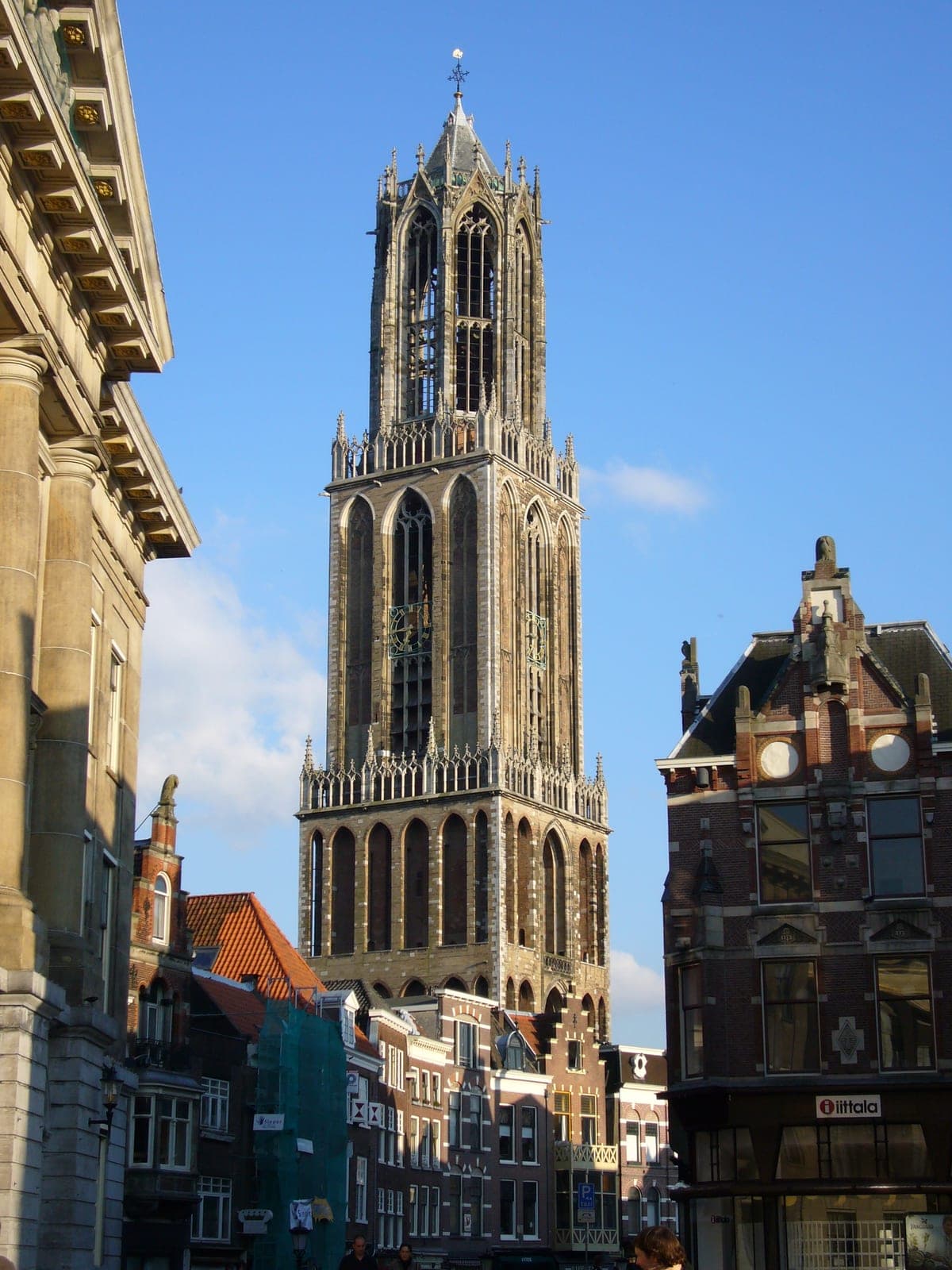
Dom Tower
465 steps, a guide, and the tallest church tower in the country.
Allow about an hour.
Rietveld Schröder House
Allow about 45 minutes, indoors. Closed Mondays. Book a couple of weeks ahead.
Domkerk
Allow about 30 minutes, indoors.
Museum Speelklok
Allow about an hour, indoors. Closed Mondays.
Het Spoorwegmuseum
Allow about 2½ hours. Closed Mondays.
Kasteel de Haar
Allow about 2½ hours.
Everything to do in the Netherlands, or build a trip around these.
Utrecht rewards a slower pace. The old town is compact enough to do entirely on foot, but the best of it happens at water level, below the street.
Getting there from Amsterdam
The train does the work. Direct Intercity services run from Amsterdam Centraal roughly every 10 minutes, over 100 per day, taking 26 to 27 minutes. A one-way fare was around 8 to 9 euros as of 2024–2025; booking on ns.nl can shave a little off. Our guide to travelling the Netherlands by train covers the ticketing mechanics.
Utrecht Centraal is the busiest station in the Netherlands and the country's central rail hub, with direct trains from most Dutch cities. Arriving from abroad? Our entry requirements guide covers the paperwork.
Skip driving. Central parking is scarce and expensive; if you must bring a car, use a Park and Ride at an outer station.
When to go, and the "empty city" myth
Terrace season runs roughly April to October, and that is when the canalside wharf terraces earn the trip. Visitors in November praise the low light on the canals too. December adds Christmas markets and light art; the Utrecht Lumen artworks at the Ganzenmarkt tunnel are visible year-round.
Do not expect a sleepy backwater. Utrecht is the fourth-largest city in the country, around 370,000 people, and a big university town. It gets genuinely busy, just far less touristy than Amsterdam.
The quiet window is weekday mornings: sleepy streets, empty canals, the best photos.
Where to stay, and is one night enough?
Half a day covers the highlights, but the local consensus is one or two nights. Evenings on the canals are the payoff, and hotels run considerably cheaper than Amsterdam equivalents. Given the rail hub, there is a real case for basing here for your whole trip; our guide to where to stay on a first trip weighs Utrecht against Amsterdam.
The hotel stock has character. Grand Hotel Karel V is a five-star in a former 14th-century monastery with a Michelin-star restaurant. Mother Goose and Hotel Dom are boutique picks with Dom views. Eye Hotel occupies a former eye hospital, BUNK a converted church with a bar under the organ, and Daen's an old fire station.
Travelling with kids? StayOkay Utrecht Centrum has Miffy-themed and train-museum-themed family rooms.
The canals: why Oudegracht is unlike anywhere else
Utrecht's canal setup exists nowhere else. The Oudegracht runs on two levels: medieval wharf cellars, the werven, sit at water level with the street a storey above. Many cellars are now restaurants and bars, so you eat with the water at your elbow or look down from the street.
For quieter water, walk the Nieuwegracht, entered over small bridges, and the Kromme Nieuwegracht. Locals also point to Dorstige Hartsteeg, south of the Dom, and Twijnstraat toward the old city limits.
To get onto the water, book the Utrecht city canal cruise, or rent a kayak or SUP on the Oudegracht.
Free option: the Singel loop, a walk through the parkland ringing the old moat, past most of the highlights.
Dom Tower, Domplein and the city underneath
The tower stands alone because the Domkerk's nave collapsed in a storm in 1674. Coloured paving stones on Domplein mark where it stood. The church itself is essentially free to enter and holds Saturday-afternoon concerts.
DOMunder takes you beneath the square through 2,000 years of layers, including the remains of the Roman fort that started the city. Pair it with the tower climb for a half-day cluster.
Two free enclosed gardens flank the square: Pandhof van de Dom, a 15th-century cloister open most daytimes, occasionally closed for events, and Flora's Hof. A Museum Speelklok and Dom combo ticket exists too.
Museums, Miffy and what to do with kids
For families, three museums do the heavy lifting. Museum Speelklok is full of self-playing street organs and genuinely interactive. The Spoorwegmuseum lets kids board restored trains. The Nijntje (Miffy) Museum is excellent under six, but adults walk through it in no time. The Nijntje Pleintje, meanwhile, is literally one small statue. Skippable.
Better than the statue: the free Miffy trail. A Miffy pedestrian traffic light near Hoog Catharijne, a Dick Bruna and Miffy statue on Mariaplaats, a giant Miffy in the kids' section of Bibliotheek Neude, a Nijntje-liveried train on the Jaarbeursplein side of the station, Miffy cookies at Theo Blom bakery.
For adults: the Centraal Museum is the oldest municipal museum in the Netherlands (1838) and holds a replica of Dick Bruna's studio. There are also Museum Catharijneconvent for religious art, the University Museum with its botanic garden, and Sonnenborgh Observatory in an old fort.
The Rietveld Schröder House, the 1924 UNESCO-listed De Stijl icon on the city edge, is for architecture fans specifically, not a default stop.
One free stunner: the Art-Deco main hall of Bibliotheek Neude, the library in the former post office, shared with the Broese bookshop.
Where to eat and drink
Think in settings. In the wharf cellars: De Zwarte Vosch does tapas on the Oudegracht where you pay by counting skewers, Rum Club pairs a Caribbean cellar with a canal terrace, Humphrey's fills an Oudegracht warehouse. In churches: Belgian beer café Olivier serves its list under a huge organ; BUNK does the same trick under its organ. Novelties: Kaasbar sends cheese around a sushi-style conveyor belt, and The Streetfood Club needs booking ahead.
Quality picks from local writers: Héron Petit Restaurant holds a green Michelin star, Le Jardin does vegetarian on a Mariaplaats terrace, plus Trattoria Polpette and Le Mignon.
Drink local: beers from van Steek and De Leckere, bars De drie dorstige herten and Café België, coffee at Blackbird Coffee, Keek or Daen's.
One honest note: several canal-terrace spots that look touristy are rated by locals. The real trap is arriving without a Friday or Saturday reservation.
A realistic one-day plan
Build the day around the quiet morning. Walk the Singel loop and shoot the empty canals first, take a timed Dom Tower tour late morning, then DOMunder or one museum after lunch. Finish with dinner in a wharf cellar at water level.
Add the 20-minute station buffer at both ends of the day for the Hoog Catharijne walk, so train connections hold.
Family version: swap DOMunder for the Spoorwegmuseum or Speelklok and thread the free Miffy trail between stops.
Pre-book: the Dom Tower slot, weekend dinner tables, The Streetfood Club.
Day trips and where to go next
De Haar Castle at Haarzuilens is the marquee side trip, but respect the logistics: train to Vleuten, local bus to the Haarzuilens Eikslaan/Kasteel stop, then a walk of about 15 minutes. Plan half a day minimum, a full day with the grounds. Do not tack it onto a full schedule; public transport eats the hours.
Closer oddities: Molen de Ster, a working sawmill west of the station with a weekend café and Saturday tours, and the Hoge Woerd museum in a reconstructed Roman fort holding a 2,000-year-old Roman ship (bus required).
From the national hub, onward travel is trivial: Amsterdam in 27 minutes, direct trains to Rotterdam and The Hague. One common confusion worth clearing up: Kinderdijk is reached via the Rotterdam waterbus, not directly from Utrecht.
For trip planning, Utrecht slots naturally into our 7-day Randstad itinerary or the 10-day classic Netherlands route, either as the central base or the mid-trip stop.
- Netherlands entry requirements in 2026A practical, date-aware guide to passports, 90/180-day rules, EES border checks and ETIAS timing for Netherlands visitors.
- Is the I Amsterdam City Card worth it?The city card can be excellent value, but only for active plans. This guide shows when to buy it and when to skip it.
- How to travel the Netherlands by trainThe Netherlands is rail-friendly, but visitors still need help choosing between contactless payment, day tickets and regional passes.
One plan per trip length, so you can see how Utrecht fits into a short weekend and into a full week.
- 7 days in the Netherlands with familySix nights in Utrecht, one theme park, one castle and one day where nothing is scheduled7-day tripWith family
- 3 days in the Netherlands soloAmsterdam on foot, then Utrecht's sunken canals for a different rhythm3-day tripTravelling solo
- 5 days in the Netherlands with familyOne hotel for five nights, with day trips to Utrecht, the coast and the windmills5-day tripWith family
Map
Map of Utrecht
Pinned listings on the map. Tap a pin to open.
More in Utrecht