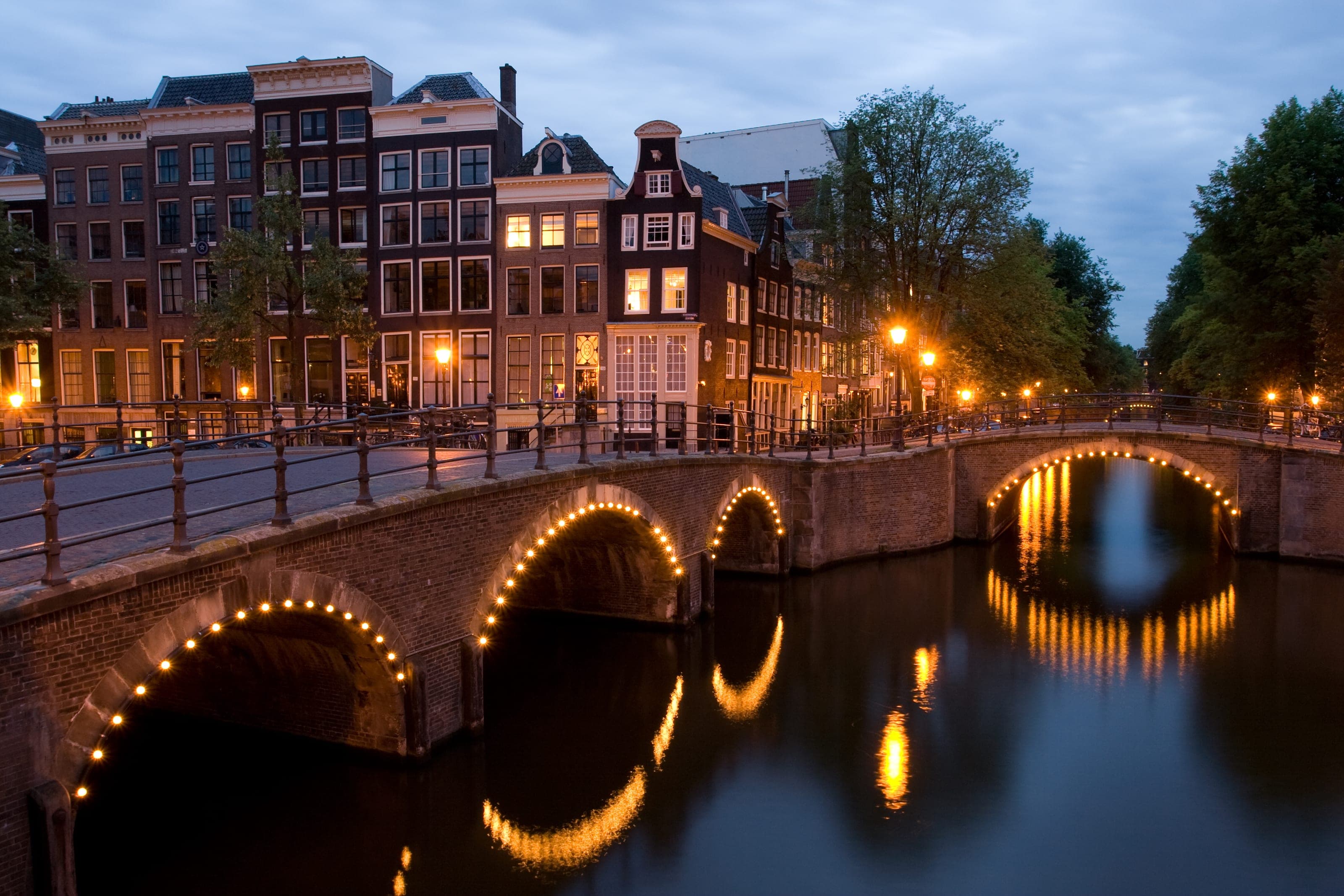
Amsterdam is the first decision point for most Netherlands trips: where to sleep, which museums to book early, and how to dodge the worst crowd traps without missing the magic.
If you do only a few things in Amsterdam
Ordered by what a first-time visitor would most regret missing, for October.
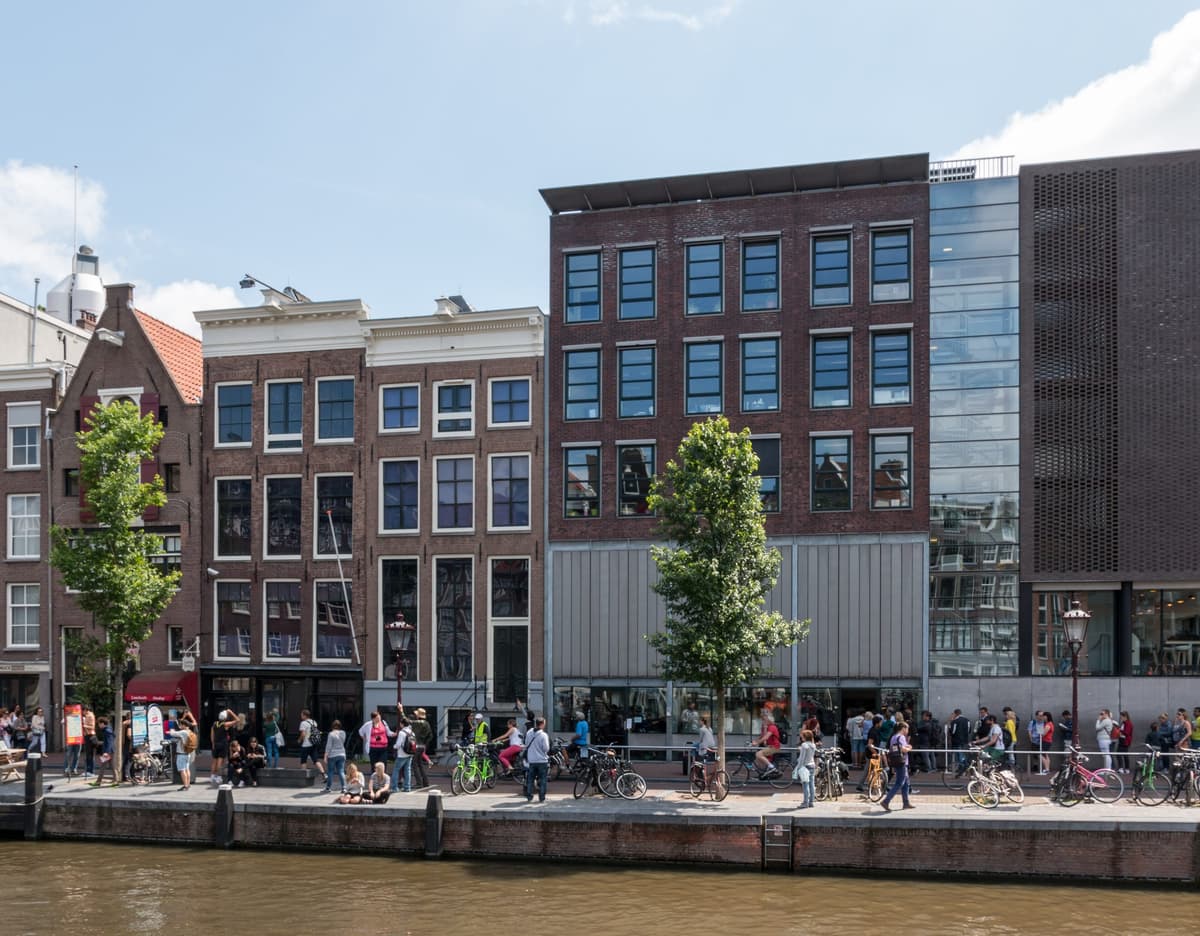
Anne Frank House
The hardest Amsterdam ticket, and the one to plan around first.
Allow an hour and a half, indoors. Book about 6 weeks ahead.
Rijksmuseum
Allow about 2½ hours, indoors.
Van Gogh Museum
Allow about 2 hours, indoors. Book a couple of weeks ahead.
Amsterdam classic canal cruise
Allow about an hour.
Verzetsmuseum
Allow an hour and a half, indoors.
Rembrandt House Museum
Allow about an hour, indoors.
Everything to do in the Netherlands, or build a trip around these.
Amsterdam rewards a little planning out of all proportion: get two or three bookings right, pick the right neighbourhood, and the rest works on a walk-and-see basis.
What to book before you go (and how far ahead)
Start with the Anne Frank House, the one booking you cannot fix later.
The Van Gogh Museum also uses timeslots (around EUR 25 at the time of writing, free under 18), sells out two to four weeks ahead in season, and sells only via the official ticket site and listed resellers.
The Rijksmuseum is more forgiving, but buy online in advance anyway; door tickets are limited.
Restaurants book up too: Restaurant De Kas runs about two months out for weekend dinner, pizza favourite nNea nearly a year. Ordinary places want a week's notice for weekend tables, a couple of days for weeknights.
Best time to visit Amsterdam
April is tulip season plus King's Day (27 April), the busiest and priciest window of the year. Hotels and canal boats book out far ahead, and Easter weekends spike too (dates shift yearly).
The tulips are at Keukenhof and the fields, not in the city, and timing shifts with the weather (warm March, earlier flowers); April is the safest bet.
Also book early for Pride in late July and August, Amsterdam Dance Event in October (party tickets announced from July) and New Year's Eve.
Given flexibility, come in September or October: calmer canals, good museum weather, our editors' pick.
Where to stay in Amsterdam: neighbourhoods and the tax trap
First-timers should look at the Canal Belt or the Jordaan. Lodging around the 9 Straatjes is scarce and expensive; prices drop as you head southwest. The Jordaan is walkable to Centraal and the Anne Frank House, and the Pulitzer Amsterdam is the canal-belt splurge.
The Museum Quarter is cheaper than the canal ring, still walkable to the canals, De Pijp and the big museums, with bus 397 direct from Schiphol.
De Pijp and Oost feel more local, with strong food scenes. On a budget, try Oost, Oud-West or Zuideramstel.
Where not to stay: between Dam Square and Centraal (chain hotels, traffic, no charm) and in De Wallen, the Red Light District at the heart of a party-town image Amsterdam is actively shedding.
The bill stings: Amsterdam's 12.5% tourist tax is Europe's highest, and on 1 January 2026 Dutch hotel VAT rose from 9% to 21%, taking combined levies on a room night to roughly 33.5%. New hotel construction is effectively banned (one must close for one to open). Rates are politically live; recheck before budgeting.
Still choosing your base city? Our guide to where to stay in the Netherlands on a first trip covers the trade-offs.
Getting there and getting around the city
Trains from Schiphol to Centraal are frequent and take about 15 to 20 minutes; bus 397 goes direct to Museumplein if you are staying in the Museum Quarter.
In town, OVpay is all you need: tap in and out with your own contactless debit or credit card on trams, buses, metro and national trains. No OV-chipkaart needed for a normal visit, and GVB caps what you pay per day automatically (check GVB for the current cap). Day-trippers can also consider the Amsterdam & Region Travel Ticket; the wider rail picture is in How to travel the Netherlands by train.
Two warnings. Walking in bike lanes is the number one tourist error, and the city centre should not be your first-ever bike ride; see our safety notes. And some shops and cafés refuse Visa and Mastercard credit cards, so carry a debit card or a little cash (see our money essential).
What's actually worth your time
With the Rijksmuseum and Van Gogh booked, art is covered; the Anne Frank House handles history. For something lighter, the Heineken Experience is an easy afternoon.
Nightlife needs less lead time: RadioRadio, Doka, Parallel and Garage Noord sell early-bird tickets week-of, and door entry usually still works. For sold-out concerts, Ticketswap is the legitimate resale route; skip anything else, per our scams essential. City Card holders get 25% same-day discounts at Bimhuis, Muziekgebouw and the Nationale Opera & Ballet.
Two etiquette notes: tipping is not mandatory (round up or add 5 to 10% for good service), and smoking cannabis on the street is banned in the old centre — keep it to coffeeshops. More in our etiquette essential.
Where and what to eat in Amsterdam
Skip the listicles and eat by dish. Haring comes from Stubbe's stall at the Singel and Haarlemmerstraat corner (about EUR 4; closed early in the week, so check before a detour). Bitterballen with beer belong at Café Hoppe on Spui, roughly EUR 8 to 10 for eight. Fries come from Vleminckx on Voetboogstraat, frying since 1957.
For brown café culture, try Café Chris in the Jordaan (pouring since 1624), the canal terrace at Café 't Smalle on Egelantiersgracht, or De Sluyswacht, the leaning house near the Rembrandthuis.
For a Dutch sit-down meal, Moeders on Rozengracht does stamppot that is touristy but genuine, and Greetje on Peperstraat is the better dinner. The other essential is Indonesian rijsttafel, a rice-table feast and Dutch-colonial legacy dish: Sampurna on the Singel or Tempo Doeloe on Utrechtsestraat, EUR 40 to 60 per person, booking essential.
The bright-orange flavoured cheese wheels in canal-side tourist shops are a marketing product. Buy 18-month aged Gouda instead at De Kaaskamer on Runstraat or Kef in De Pijp; it keeps for weeks.
Albert Cuyp in De Pijp is the largest open-air market in the Netherlands, and Noordermarkt on Saturdays pairs well with Winkel 43's apple pie. On a rainy day, Foodhallen Amsterdam is the indoor fallback. The general rule: walk a few blocks off the Dam and Centraal drags and both food and prices improve.
The Red Light District and coffeeshops: rules before curiosity
De Wallen is a neighbourhood people live in, and Amsterdam polices it more strictly each year. Smoking cannabis on the street there has been banned since 2023 and draws on-the-spot fines; keep it inside a coffeeshop.
Never photograph the workers in the windows. Treat that as absolute: it is about their privacy and safety, and phones have ended up in the canal over it. Guided tours no longer pass the windows either (banned since 2020), though you are free to walk the district yourself.
The coffeeshops are orderly by design: strictly 18+, small quantities only, no alcohol sold. Tourists are allowed in Amsterdam's shops; Maastricht and much of the south turn non-residents away at the door.
The one hard rule our editors will repeat: never buy from street dealers. It is illegal, and the product is untested; dealers here have sold heroin as cocaine and killed tourists. Rules keep tightening, so check the City of Amsterdam for current restrictions, then read Red Light District, coffeeshops and Dutch drug rules.
A realistic day plan and crowd tactics
Anchor each day around its one immovable piece, usually the Anne Frank timeslot. A shape that works: big museum in the morning, canal-side lunch, one neighbourhood for the afternoon (Jordaan or De Pijp), then a brown café for the evening borrel.
Crowd tactics are structural rather than clever: avoid the Dam-to-Centraal corridor, favour weekday mornings, and pick September or October if you can. Treat King's Day and the big event weeks as things to plan around, not sightseeing days.
Want it pre-built? Use our itinerary for 3 days in Amsterdam for a first trip.
Day trips from Amsterdam and where to go next
All run from Centraal:
- Zaanse Schans: 17 to 20 minutes by train to Zaandijk Zaanse Schans station, around EUR 4.
- Haarlem: 10 to 15 minutes, about EUR 7, every 10 minutes; the City Card also covers Haarlem museums and a canal cruise there.
- Utrecht: 30 to 40 minutes, about EUR 11, every 10 minutes.
- The Hague: about 45 minutes and EUR 15, roughly every 15 minutes.
- Zandvoort beach: a 30-minute direct train.
Two special cases. Keukenhof opens only in spring (roughly late March to mid May) and gets very crowded; prebook, and know public transport takes an awkward hour, so a tour or car is easier. Giethoorn is around three hours each way by public transport: tour bus or car only.
Ready to move on? Amsterdam works best as the opening base of a longer loop, either 7 days across Amsterdam, Delft, Rotterdam and The Hague or 10 days in the classic Netherlands, with Delft and Rotterdam the natural onward rail moves. Rail logistics are in How to travel the Netherlands by train, and arrival paperwork is in Netherlands entry requirements in 2026.
- 3 days in Amsterdam for a first trip3 days · canals · museums
- 7 days across Amsterdam, Delft, Rotterdam and The Hague7 days · museums · architecture
- 10 days in the classic Netherlands10 days · canals · waterworks
- Netherlands entry requirements in 2026A practical, date-aware guide to passports, 90/180-day rules, EES border checks and ETIAS timing for Netherlands visitors.
- Is the I Amsterdam City Card worth it?The city card can be excellent value, but only for active plans. This guide shows when to buy it and when to skip it.
- How to travel the Netherlands by trainThe Netherlands is rail-friendly, but visitors still need help choosing between contactless payment, day tickets and regional passes.
One plan per trip length, so you can see how Amsterdam fits into a short weekend and into a full week.
- 2 days in the Netherlands soloAmsterdam at your own pace, then Haarlem for the quieter contrast2-day tripTravelling solo
- 3 days in the Netherlands soloAmsterdam on foot, then Utrecht's sunken canals for a different rhythm3-day tripTravelling solo
- 5 days in the Netherlands soloTwo nights in Amsterdam, then a Rotterdam base for windmills, harbour and Delft5-day tripTravelling solo
Where to stay and eat in Amsterdam
A place to start, not a shortlist. Book stays early for spring and summer.
Where to stay
- Pulitzer Amsterdamfrom €420
The polished canal-house splurge that sells Amsterdam as a place to stay, not just visit.
- Hotel Jakarta Amsterdamfrom €260
A sustainable waterfront hotel with indoor-garden drama.
Where to eat
- Restaurant De Kasfrom €85
Greenhouse dining that feels local, seasonal and memorable.
- Foodhallen Amsterdamfrom €15
The easy group-dining answer for a first night in Amsterdam.
- Amsterdam Indonesian rijsttafelfrom €45
A first-time food ritual with history, abundance and strong conversion intent.
Map
Map of Amsterdam
Pinned listings on the map. Tap a pin to open.
More in Amsterdam