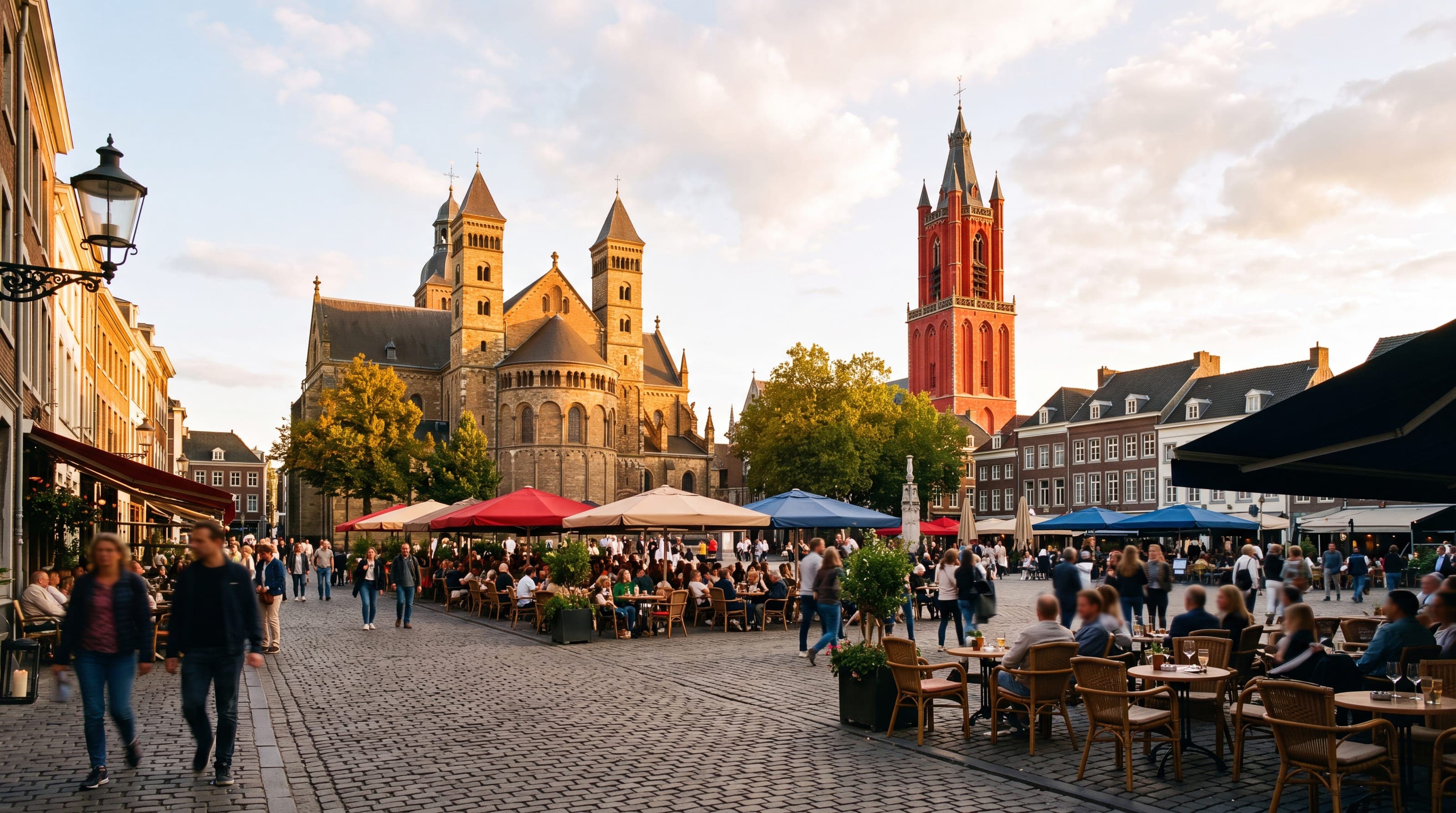
Maastricht feels different from the rest of the Netherlands: warmer in tone, hillier around the edges and excellent for food-focused weekends.
If you do only a few things in Maastricht
Ordered by what a first-time visitor would most regret missing, for October.
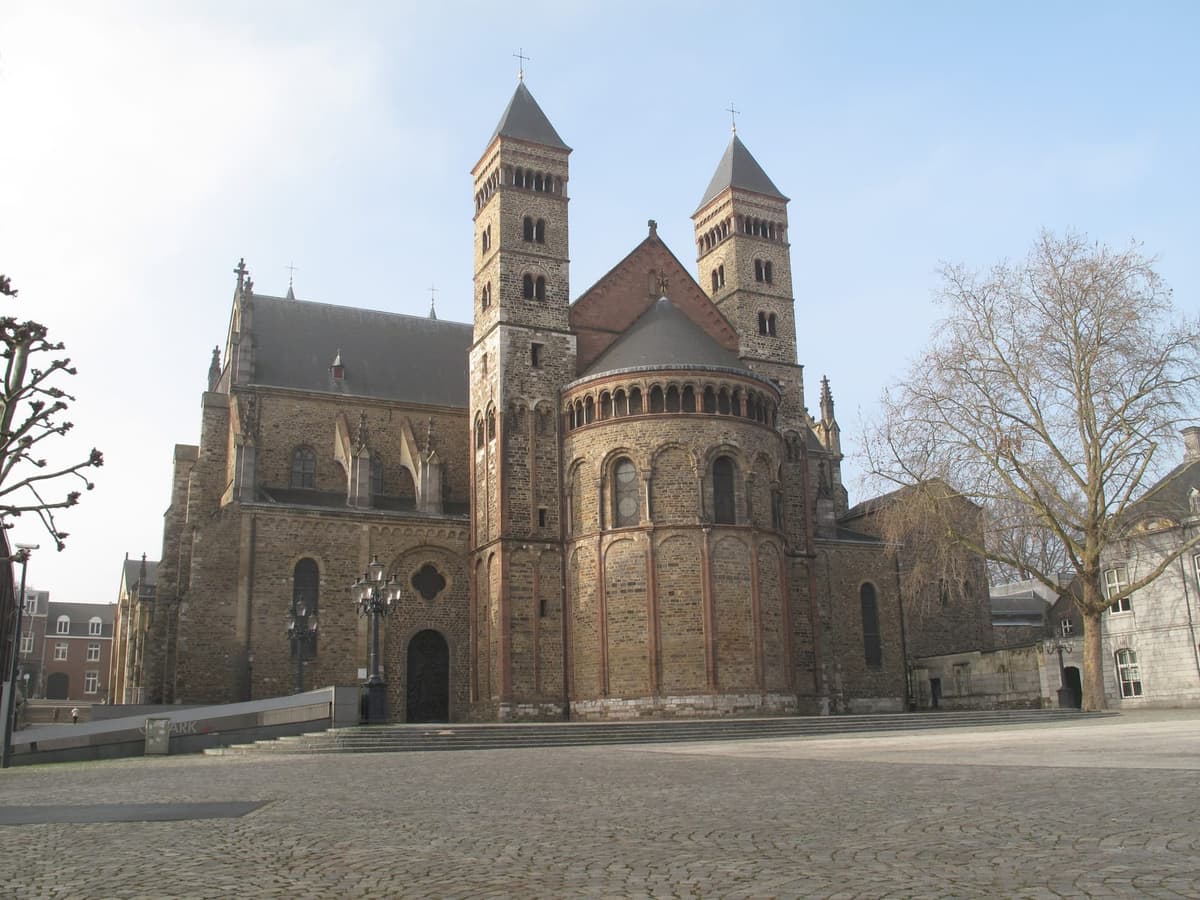
Sint-Servaasbasiliek and its Treasury
The oldest church in the Netherlands, over the grave it was built for.
Allow about an hour, indoors.
Bonnefanten
Allow an hour and a half, indoors. Closed Mondays.
Fort Sint Pieter
Allow about an hour.
Onze-Lieve-Vrouweplein
Allow about 45 minutes, outdoors.
Maastricht caves and Vrijthof route
Allow about 3 hours.
Sint Servaasbrug
Allow about 15 minutes, outdoors.
Everything to do in the Netherlands, or build a trip around these.
The practical shape of a Maastricht trip is simple: stay at least one night, book the cave tour before anything else, and eat well. Here is how to do all three.
Best time to visit Maastricht
April to June and early autumn are the sweet spot: terrace weather on the Vrijthof and Onze-Lieve-Vrouweplein without the midsummer crowds.
July comes with a caveat. André Rieu plays his open-air concert series on the Vrijthof that month, tickets sell out, and hotel prices inflate citywide. Not coming for the concerts? Pick a different month. And no, you cannot visit his house; it is private.
December is the other pressure point. Magical Maastricht runs daily from roughly late November to December 31 on the Vrijthof. It is a winter fair, not an artisan market: ferris wheel, ice rink, indoor glühwein lounges, and drink stalls that take tickets bought at booths, not cash. Good fun on a weekday, a crush on weekends.
Carnaval, in February or March depending on the year, takes over the city for three days: brilliant if chosen deliberately, chaotic if stumbled into.
One hard rule: book beds absurdly early for December and July. In one recorded year, around 75 percent of December-weekend accommodation was gone by early September.
How to get to Maastricht by train
The direct NS Intercity from Amsterdam Centraal takes about 2 hours 23 minutes at its fastest, closer to 2 hours 40 on average; check fares when you book. Our guide to travelling the Netherlands by train covers tickets and how to pay.
That settles the day-trip question: five-plus hours round trip from Amsterdam kills the slow, southern pace you came for. Plan one night minimum, ideally a full weekend.
Better still, flip the map and arrive from Belgium or Germany instead of treating Maastricht as an Amsterdam satellite. Liège is as little as 34 minutes on the fastest service. Brussels works with a change in Liège, since there is no high-speed link. Aachen is under an hour on the stopping line through Meerssen, Valkenburg and Heerlen. If your trip starts outside Schengen and lands in Brussels or Düsseldorf first, our entry requirements guide has the basics.
Where to stay: Wyck, the Vrijthof quarter or near the caves
Wyck is the consensus base. It sits between the station and the river, holds boutique hotels (The Dutch is the type specimen) and the independent shops of Rechtstraat, and is a five-minute walk to the Sint Servaasbrug.
Near the Vrijthof you are closest to the landmarks and nightlife. Out towards Sint Pietersberg is quieter, near the caves and walking trails.
Wherever you land, remember: December and July fill months out. For picking bases across the country, see where to stay in the Netherlands on a first trip.
The Sint Pietersberg caves: North Caves, Zonneberg and how to book
This is the anchor experience, so let us kill the misconception first: these are not natural caves but man-made marlstone quarry tunnels, carved since Roman times, and you can only enter with a guide. No self-guided option exists.
There are two separately bookable systems:
- North Caves (Grotten Noord). The standard tour, about 1 hour 10 minutes, passes charcoal wall drawings and tells the story of the Kluis, the vault where around 780 Dutch art treasures, including the Night Watch, were hidden in WWII. A longer tour of about 1 hour 40 minutes enters the vault itself.
- Zonneberg. A WWII air-raid shelter for the civilian population: giant bread oven, wartime wall graffiti, and a life-size Night Watch replica underground. An optional electric-scooter tour goes deeper.
Book English-language slots online in advance via the official Maastricht Underground site; they sell out. Regular tickets have been around 9 to 10 euros per tour, but check current prices when you book. Zonneberg tours start at Buitengoed Slavante, a riverside café about an hour's walk from the centre or a short Arriva bus ride. The buses are cashless: tap in and out.
The underground family goes further if you want it: Fort Sint Pieter above the caves has its own hour-long tour (walk the ramparts for free views while waiting for a cave slot), Casemates Waldeck covers mine galleries dug between 1575 and 1825, and there is a tour of a Cold-War former NATO headquarters bunker. Combination tickets exist. We have plotted the caves and old town together in our Maastricht caves and Vrijthof route.
Old town walk: Helpoort, the basilicas and a bookstore in a church
The centre is compact, fully walkable and sits on the Meuse, not on canals. If you arrive expecting Amsterdam scenery, adjust fast: the appeal here is Romanesque churches and a Belgian-French atmosphere the rest of the country does not have.
Start at Helpoort, the "Hell Gate", the oldest surviving city gate in the Netherlands, with the small Vesting fortification museum inside. The medieval walls thread on through Faliezusterspark and Monseigneur Nolenspark, home to a deer park and an aviary.
The Basilica of Our Lady is dark, Romanesque and atmospheric, with a busy candle chapel. It fronts Onze-Lieve-Vrouweplein, the prettiest terrace square in town. On the Vrijthof you get Sint-Janskerk with its red tower (the ox-blood story is legend, it is paint) next to the Basilica of Saint Servatius, one of the oldest churches in the Netherlands. Cross the 13th-century Sint Servaasbrug into Wyck to finish.
Save time for Boekhandel Dominicanen, a bookstore inside a Dominican church dating to 1294, converted in 2005, with a Coffeelovers café at the altar end. Strong Dutch selection, thinner English shelf, and the bathroom is paid, so keep a coin handy.
What and where to eat in Maastricht
Locals call their eating culture Bourgondisch: rich, unhurried, leaning French and Belgian. It is the single best reason to give the city a full weekend.
The signature dish is zoervleis (also written zuurvlees), a sweet-sour braised stew, traditionally sometimes made with horse, served with fries. Locals point to In den Ouden Vogelstruys on the Vrijthof and Café Sjiek as reference versions, but you will find it across the old town.
Also worth seeking out: vlaai, the Limburg fruit pie, at Bisschopsmolen, a bakery on a still-working watermill that grinds on weekend daytimes. Pungent Limburger cheese from the Wyck shops. Brouwerij Zuyd beer, poured at Café de Zwaan. And in winter, Schrobbelèr, the herb liqueur you will see everywhere, at 21.5 percent, sipped rather than shot.
Know the terrace hierarchy. The Vrijthof terraces are the touristy, pricier option; the view justifies one drink, no more. Locals also use Onze-Lieve-Vrouweplein and the Markt. Cards are the default; carry a little cash, and read our money essential before you count on it.
One rule Maastricht applies differently: coffeeshops here enforce the residents-only rule (ingezetenencriterium), introduced in the south to stop cross-border drug tourism. Staff check Dutch residency at the door and turn visiting tourists away, so do not plan around a coffeeshop stop the way you might in Amsterdam. The full rules, city by city, are in our guide to the Red Light District, coffeeshops and Dutch drug rules.
A realistic day-by-day plan for a Maastricht weekend
Arrive in the afternoon, settle into Wyck and spend the evening on Rechtstraat: browse the shops, buy cheese, eat locally.
Day one is the old town. Walk the Helpoort and city-wall circuit through the parks, spend an hour in Boekhandel Dominicanen, take a long terrace lunch on Onze-Lieve-Vrouweplein, then do the two basilicas and one paid-for drink on the Vrijthof.
Day two is underground. Book the cave slot first and build the day around it: walk the Fort Sint Pieter ramparts for free before the tour, come back along the river via Slavante, finish with a slow Bourgondisch dinner.
In December, add margin: one day during market season is not enough, since the shopping streets and the caves each eat most of a day.
Day trips from Maastricht and where to go next
Valkenburg is 15 minutes by train: castle ruins, and in December two Christmas markets held inside caves. Repeatedly rated the country's best Christmas town; touristy but worth a half day.
Cross-border hops are the other advantage of sleeping here: Aachen and its cathedral under an hour on a cheap ticket, Liège between 34 minutes and an hour. Maastricht is genuinely a three-country hub.
The South Limburg hills offer the only truly hilly cycling and hiking in the country, plus the Dutch wine region, the American WWII cemetery at Margraten and Gulpener brewery country. Stiphout runs Meuse river cruises from the city.
Maastricht works best as the slow southern finale after the Randstad, which is how we sequence it in 10 days in the classic Netherlands. Afterwards, Eindhoven, Utrecht and Amsterdam all make natural next stops, depending on where your trip ends.
- Netherlands entry requirements in 2026A practical, date-aware guide to passports, 90/180-day rules, EES border checks and ETIAS timing for Netherlands visitors.
- Is the I Amsterdam City Card worth it?The city card can be excellent value, but only for active plans. This guide shows when to buy it and when to skip it.
- How to travel the Netherlands by trainThe Netherlands is rail-friendly, but visitors still need help choosing between contactless payment, day tickets and regional passes.
One plan per trip length, so you can see how Maastricht fits into a short weekend and into a full week.
All twelve plansMap
Map of Maastricht
Pinned listings on the map. Tap a pin to open.
More in Maastricht